
Holiday Cooking Safety
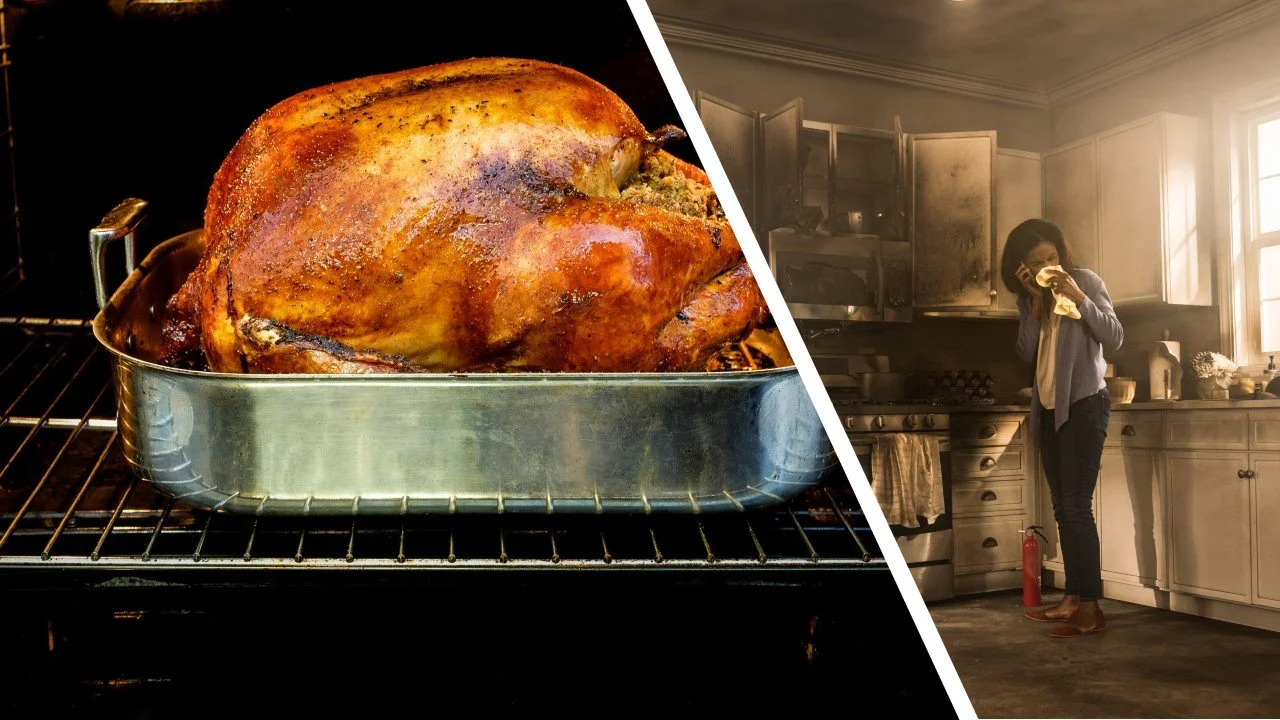
Holidays are a time for gathering and celebrating, and food often plays a central role. There was a recent story in the news about a couple who died in their Roswell apartment due to an unattended cooking fire. Cooking fires are the most common source of household fires today so here are some essential safety tips to keep in mind while cooking a feast for friends and family during the holidays.
Stay in the kitchen! Never leave cooking unattended, especially when frying, grilling, or broiling. If you must leave for any reason, have someone else stay in the kitchen to monitor the stove or oven while you are away. It does not take long for a cooking fire to start and grow enough to get out of control. This is especially true for any form of cooking that involves the spatter of hot oil or grease. Always be sure the oven, microwave and stove are turned off when done cooking and before you leave the kitchen.
Children and pets should be kept at a safe distance from the stove and hot appliances. They should always be supervised when anything is being cooked. They should also be kept away from the stove until ALL the burners are completely cooled enough to be safe to touch. Never hold a child while cooking or handling hot food. Turn pot handles toward the back of the stove so they cannot be bumped or pulled by reaching hands. If children are in the kitchen, try to use the back burners when possible.
Avoid wearing loose clothing or long sleeves that could catch fire. Keep other items away from the such as potholders and oven mitts stovetop that may also catch fire. This includes items like towels (paper and cloth), bags (paper and plastic), cardboard food packaging and curtains. Always use heat-resistant tools such as potholders and oven mitts when handling hot pots, pans, and oven dishes. When not in use, these items should be stored safely away from the stovetop.
A clean kitchen reduces the risk of accidents and fires. Grease builds up everywhere while cooking. It is highly flammable, so keeping the stove, backsplash, vent hood and surrounding counters clean reduces the risk of fire. It is also a good idea to avoid storing anything on top or behind appliances that may block ventilation. Never use metal, disposable plastic or Styrofoam in a microwave oven. Position your toaster where there is nothing directly overhead, because it puts out a lot of heat. Be sure to empty out crumbs regularly and never stick anything in a toaster to remove a stuck piece of toast until the unit is unplugged.
Keep a working fire extinguisher in your kitchen and know how to use it. There are some differing points of view about smoke detectors in the kitchen. Cooking smoke often will set them off, so putting a detector in the kitchen may cause a lot of false alarms. One popular option is to put a smoke detector just outside the kitchen to reduce (but not necessarily eliminate) false alarms. You can use a heat detector in the kitchen. This is a device that detects increases in the room temperature instead of being sensitive to smoke. These are more limited than smoke detectors in detection capabilities and should not be used as a substitute everywhere.
When working on the stovetop, don't overcrowd the stovetop with multiple pots and pans. Use lids on pots and pans to prevent spills and reduce cooking time. If a small fire erupts in the pan, slide the lid over the pan, turn off the stove, and let the pan cool. Hot oils can ignite easily. Avoid overfilling pots and pans with oil. Use deeper pots and pans with lids, when possible, to minimize spatter. Use the right oil for your recipe since different oils ignite at different temperatures. Watch what you are cooking. If oil begins to smoke, turn the heat down and carefully remove the pan from the stove. Smoking oil is a sign that it is close to catching fire. If oil does catch fire, turn off the burner immediately but do not try to remove the pan from the stove because you may spill the oil, causing more damage and serious injury. Never use water to put out a fire involving oil or grease. If you cannot snuff out the flame with a lid, douse the flames with baking soda if safe to do so. If the fire is out of control, evacuate the area and call 911 for the fire department.
When cooking in the oven, ensure your oven mitts are heat-resistant before using them. Set timers to remind yourself when food is in the oven. Storing items in the oven can create a fire hazard because there is a risk that someone will turn on the oven forgetting or not realizing items are inside. If the food in the oven does catch fire, turn off the heat and keep the door closed to prevent flames from burning you or anything flammable that is close by. If the fire goes out on its own, have the oven checked before using it again. If the food in the oven does not go out on its own, evacuate the area and call 911 for the fire department.
In general, when working in the kitchen, keep a clean and easily accessible workspace for food preparation. Avoid unnecessary bending or reaching around hot items and raw foods. You need enough clear space to be able to put hot pots or pans down when they are done cooking. Try to minimize how far you must carry hot liquids to reduce the risk of scalding yourself if you spill. Never cook when you are tired, medicated, intoxicated or otherwise distracted from what you are doing. Always use sharp knives and cut away from yourself.
When cooking for guests, be aware of any food allergies and take necessary precautions. To prevent the spread of germs, avoid double-dipping into dips and sauces. Make sure food is cooked all the way through. Leftovers should be consumed or tossed within two days and not reheated more than once. Store raw foods such as meat at the bottom of your fridge so they are below ready to eat foods stored there too. Do not store food uncovered in the fridge. Either cover it with foil or plastic wrap or else transfer it to an airtight container. Check expiration dates before using any food for holiday (or any other) meals. Be sure you have separate cutting boards for raw meat and produce. Designate one cutting board for raw meat so nothing else is ever chopped on it and be sure that raw meat is never used on anything else. Cutting boards should never be wood, since it is difficult to sanitize this porous material. Wash all produce before using it, but do not wash raw meat before cooking because that can spread bacteria.
By following these safety tips, you can enjoy a happy and safe holiday season while creating delicious memories. If you do have a kitchen fire or any other sort of household disaster during the holiday season, call ServiceMaster of Gwinnett or ServiceMaster 5 Points for your disaster restoration. Our emergency services are available 24 hours a day every day of the year including holidays. Even if you are disaster free, we are here to help. We can clean windows, flooring and furniture before the guests arrive for an inviting entertainment area for parties and family gatherings. We can also come after the guests are gone to help clean up the holiday mess and get your home back to normal.